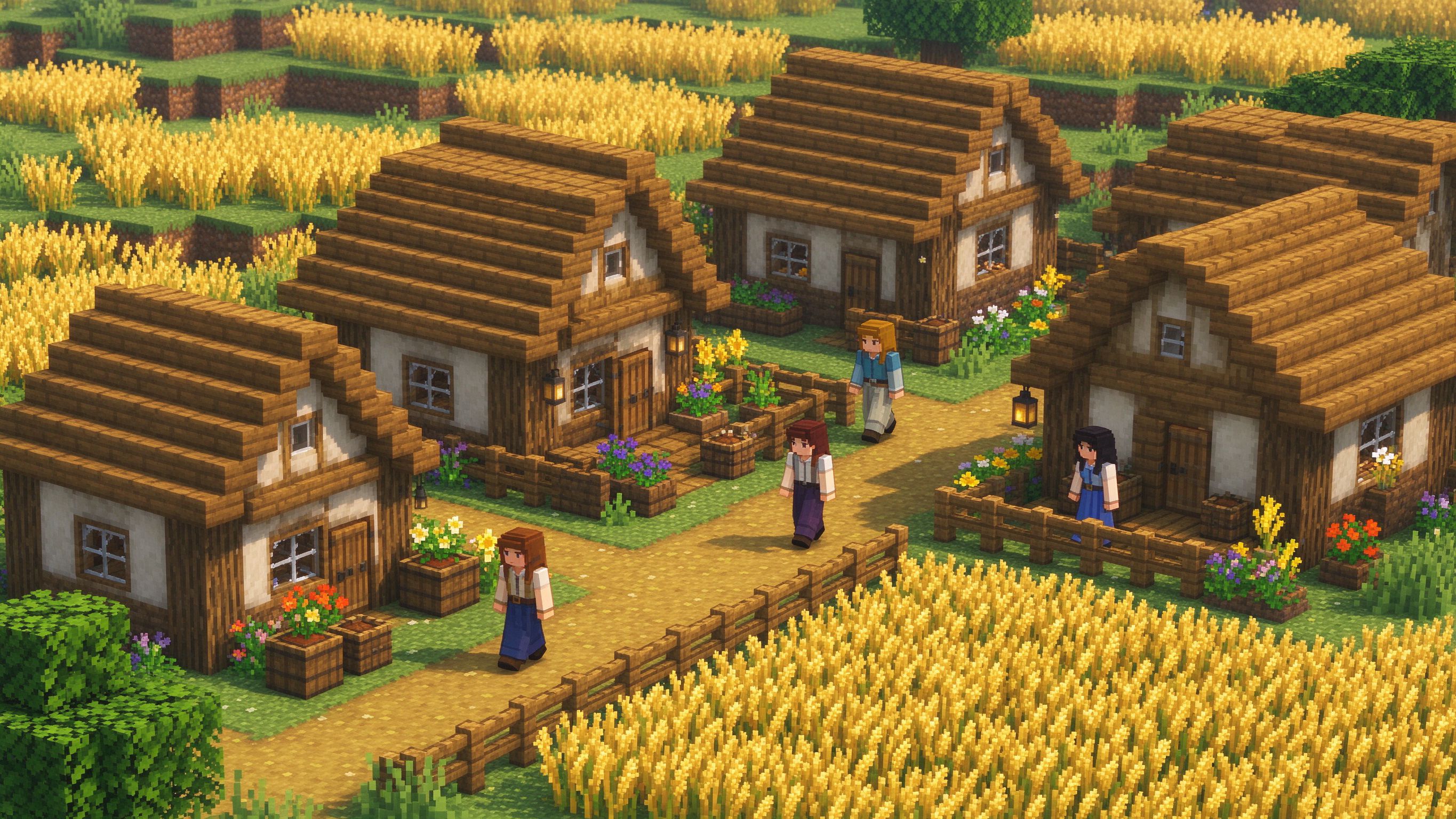
Villagers are the best renewable resource in the game — a breeding pair turns into a self-sustaining population that supplies enchanted books, tools and emeralds. Breeding only needs beds, food and a working villager.
What villagers need to breed
- Beds: each baby needs a bed with 2 blocks of headroom. More beds than villagers = they keep breeding.
- Food: bread (3), carrots/potatoes/beetroot (12) per willing villager. Throw it at them or use a farmer’s auto-harvest.
- Willingness: a villager becomes “willing” after collecting 12 food and sharing it — that’s what lets them breed.
A simple 2-tier breeder
- Put the breeding pair in a small chamber with a farmer who farms a carrot/potato patch.
- Add 10–20 beds below, with a water drop so babies fall out of reach of the parents.
- Babies grow in ~20 minutes (feed them food to speed it up — it halves their growth).
The trading hall
- Give each villager a job block (lectern, smithing table, cartographer table…) to assign a profession.
- Lock trades by trading once — the villager keeps its offers forever, and future trades refresh stock, not the offer.
- Librarians (lectern): cycle the lectern until the trade you want (e.g. Mending) appears, then lock it.
- Group workstations 2 blocks apart and light everything; nitwits (green coat, no job) can be discarded.
Emerald economy tips
- Farmers are the fastest emerald source: trade wheat/melons/pumpkins in bulk.
- Fletchers turn sticks into emeralds cheaply early game.
- Use the Farm Calculator on ChunkScope to size your crop fields to the villager demand.
Common mistakes
- No extra beds — villagers stop breeding when beds run out.
- Not enough headroom over beds — babies suffocate, population stalls.
- Zombie siege — light your village and wall it; golems help.